Can you fly with a rechargeable medication cooler? The 100 Wh rule, explained
Yes, in most cases. A rechargeable medication cooler runs on a lithium-ion battery, and US rules allow lithium-ion batteries up to 100 watt-hours in carry-on bags. The question is what the battery is rated at, and where in the bag it goes.
The rule
The FAA's PackSafe rules for passengers set the limits by watt-hours (Wh), per battery:
- Up to 100 Wh: allowed in carry-on bags. No airline approval needed.
- 100 to 160 Wh: allowed only with the airline's approval.
- Over 160 Wh: not allowed on passenger aircraft.
Spare lithium batteries and power banks go in carry-on only, never in checked bags. Devices with lithium batteries should travel in the cabin too.
Airlines can set stricter rules than the FAA, so check before you fly.
How to read the rating
Most coolers list their battery in milliamp-hours (mAh), not watt-hours. To convert, multiply by the battery voltage and divide by 1,000. Lithium-ion cells are rated at a nominal 3.7 V.
- 10,600 mAh × 3.7 V ÷ 1,000 = about 39 Wh
- 20,000 mAh × 3.7 V ÷ 1,000 = about 74 Wh
Both are well under the 100 Wh limit. Those are the two Totem builds.
Carry-on, not checked
Pack the cooler in the carry-on. The FAA wants lithium batteries in the cabin, where a problem can be seen and dealt with. And the medication stays with the patient: no checked bag sitting on a hot tarmac, and nothing lost in transit.
At security
The TSA allows "ice packs, freezer packs, gel packs and other accessories" to keep medically necessary items cool, in a frozen, partially frozen or melted state. Before screening begins, tell the officer you are carrying medically necessary medication. If you do not want it X-rayed or opened, say so then.
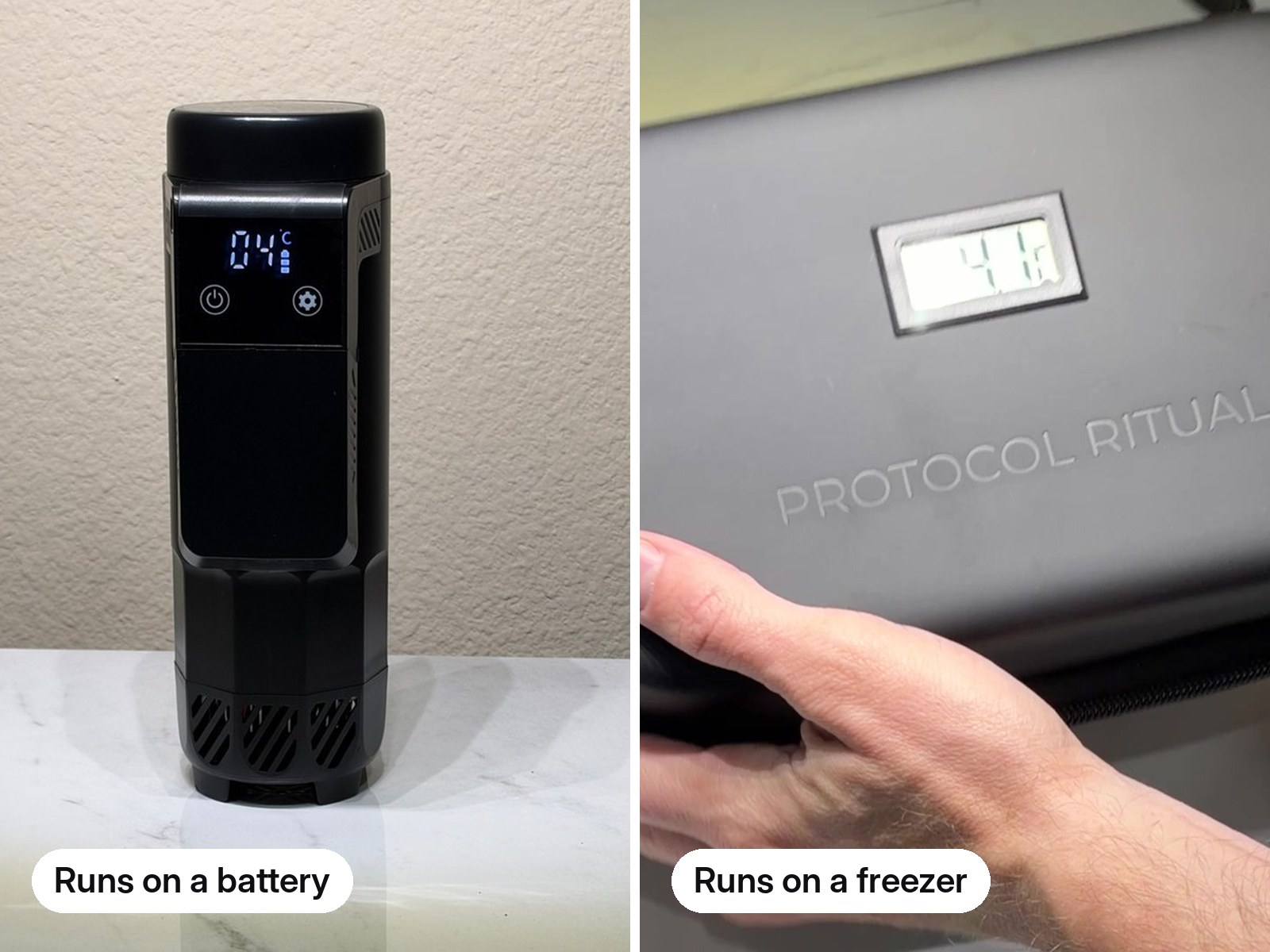
If the trip doesn't need a battery
For a day trip, a freezer-charged phase-change case is simpler. There is no battery, so there is nothing to declare. Rechargeable cooler or freezer-charged case covers which one fits which trip, and how patients travel with refrigerated medication covers what the patient needs to be told.
Rules change; check the FAA, the TSA and your airline before you fly.
Questions
Can I bring a rechargeable medication cooler on a plane?
In most cases, yes. FAA rules allow lithium-ion batteries up to 100 watt-hours in carry-on bags without airline approval. Batteries between 100 and 160 Wh need the airline's approval. Check your airline's current rules before you fly.
How do I know a cooler's watt-hour rating?
Look on the unit or in the manual. If only milliamp-hours are listed, multiply mAh by the battery voltage and divide by 1,000. A 10,600 mAh battery at 3.7 V is about 39 Wh. A 20,000 mAh battery at 3.7 V is about 74 Wh.
Should the cooler go in checked or carry-on luggage?
Carry-on. The FAA asks that devices with lithium batteries travel in the cabin, and the medication stays with the patient.
What should I tell the TSA officer?
Before screening starts, tell the officer you are carrying medically necessary medication and a cooler. TSA allows ice packs, gel packs and other cooling accessories for medically necessary items, frozen, partially frozen or melted.