Platinum-cured vs peroxide-cured silicone: does it matter for a mat?
Silicone rubber starts soft and has to be cured into a solid. There are two common ways to do it. Peroxide curing uses an organic peroxide; it is cheaper, and it leaves by-products in the rubber that have to be baked out afterwards. Platinum curing uses a small amount of platinum catalyst in an addition reaction that leaves no peroxide by-products behind. For something a patient handles every day, platinum is the cleaner cure.
How the difference shows up in testing
Germany's BfR recommendation for silicone includes a test for volatile organic matter: the lab heats the cured silicone to 200 °C for 4 hours and measures how much weight it loses. Whatever evaporates was left in the rubber. The limit is 0.5% of the weight.
Our mat's silicone, tested by SGS in January 2026 (report CANEC25032638801), lost 0.26%: about half the limit.
The same report tested for residual platinum, the catalyst itself. None was detected above the reporting limit of 20 mg/kg, against a BfR limit of 50 mg/kg.
How to know which one you are buying
You can't tell by looking, touching or smelling. Two things settle it:
- The maker's written confirmation. Ours confirmed in writing that the mat is produced from platinum-cured silicone.
- The volatile organic matter result. A test report with a number below 0.5% is the measurable proof.
"Platinum silicone" on a listing without either is a claim, not a fact.
Does it change how the mat behaves?
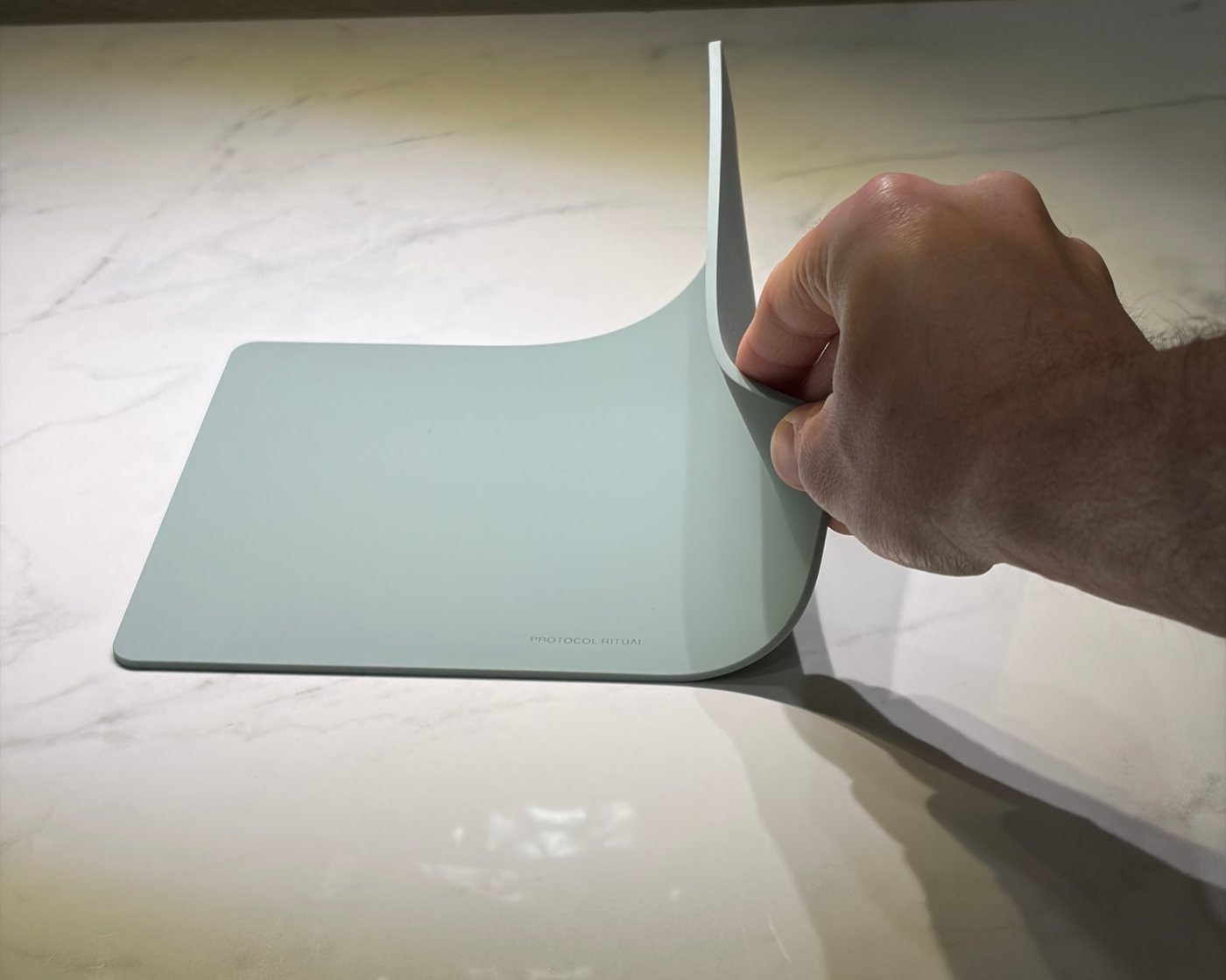
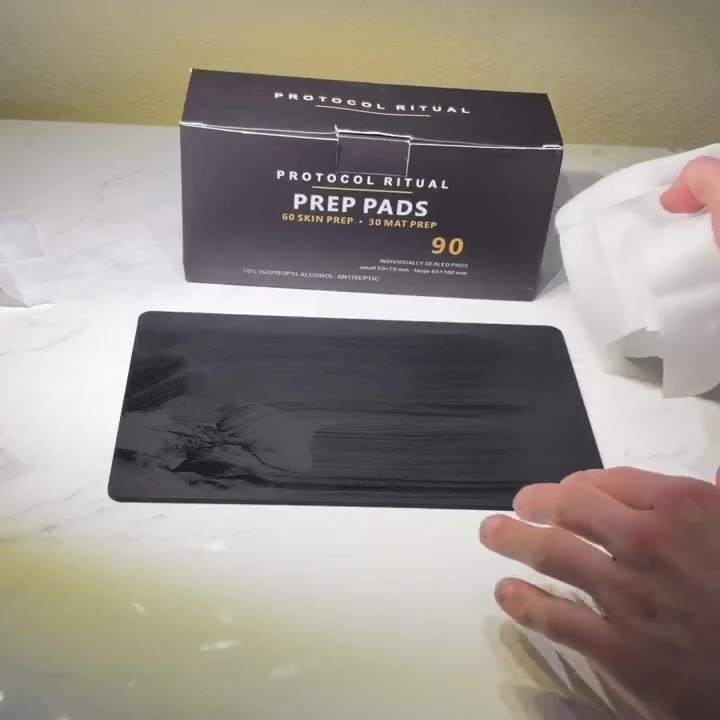
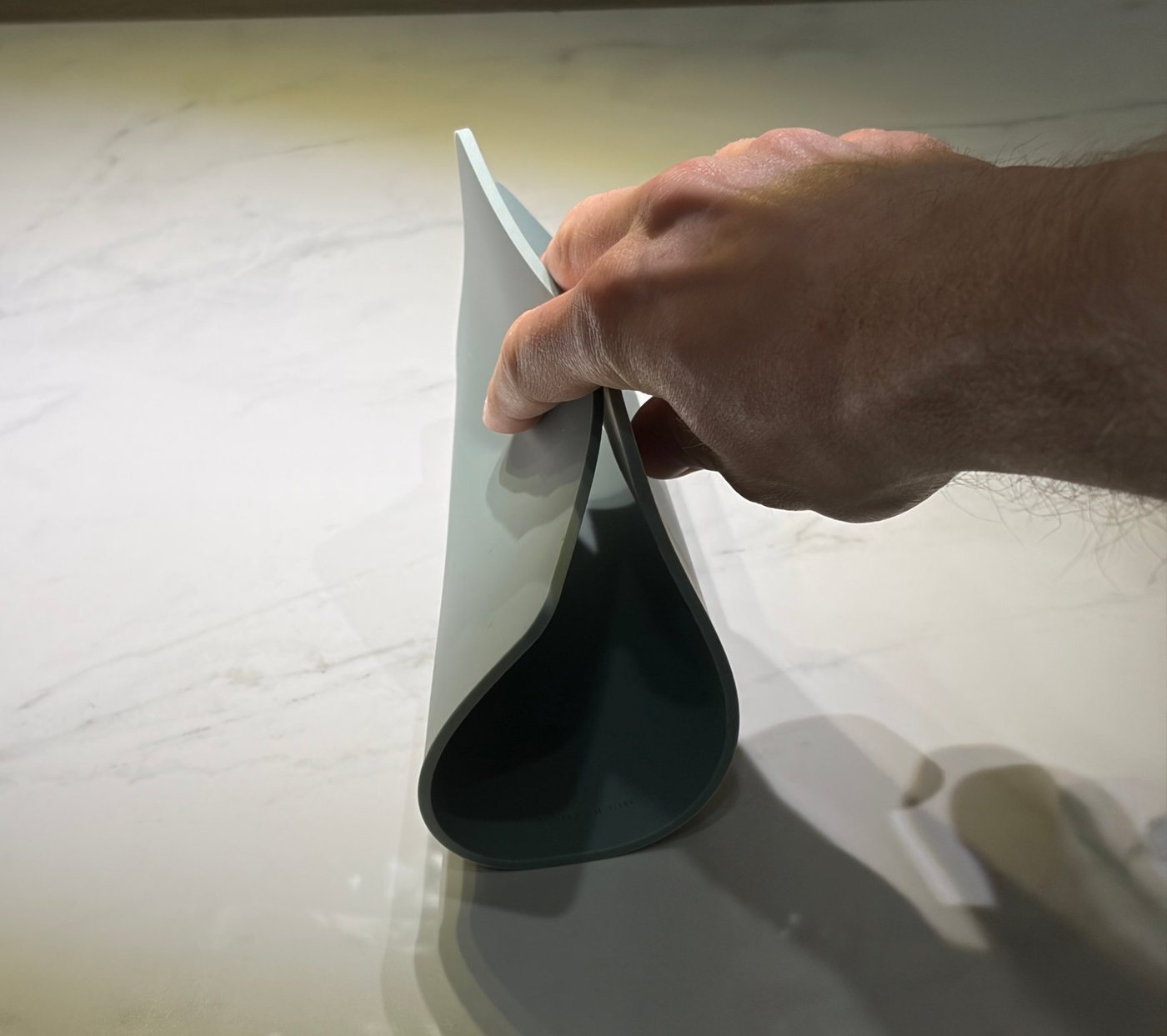
The cure is chemistry, but the mat is what a patient notices: it folds without creasing, springs back flat, and wipes back to new with an alcohol pad. Ours has been on the founder's counter three or four times a week for six months without wear.
See the Reconstitution Mat, read LFGB vs FDA, or get a quote.
Questions
What is the difference between platinum-cured and peroxide-cured silicone?
Both turn liquid or gum silicone into solid rubber. Peroxide curing uses an organic peroxide and leaves by-products in the rubber that have to be baked out. Platinum curing uses a platinum catalyst in an addition reaction that leaves no peroxide by-products.
How can you tell which one a mat is?
You can't by looking. Ask the maker in writing, and ask for the BfR test for volatile organic matter, which measures what is left in the cured silicone.
Is there platinum left in the mat?
In our mat's silicone, SGS found none above the reporting limit of 20 mg/kg, against a BfR limit of 50 mg/kg.